
What Stayed After the Culture Shock
Learning Acceptance and Inspiration in the Chaos of India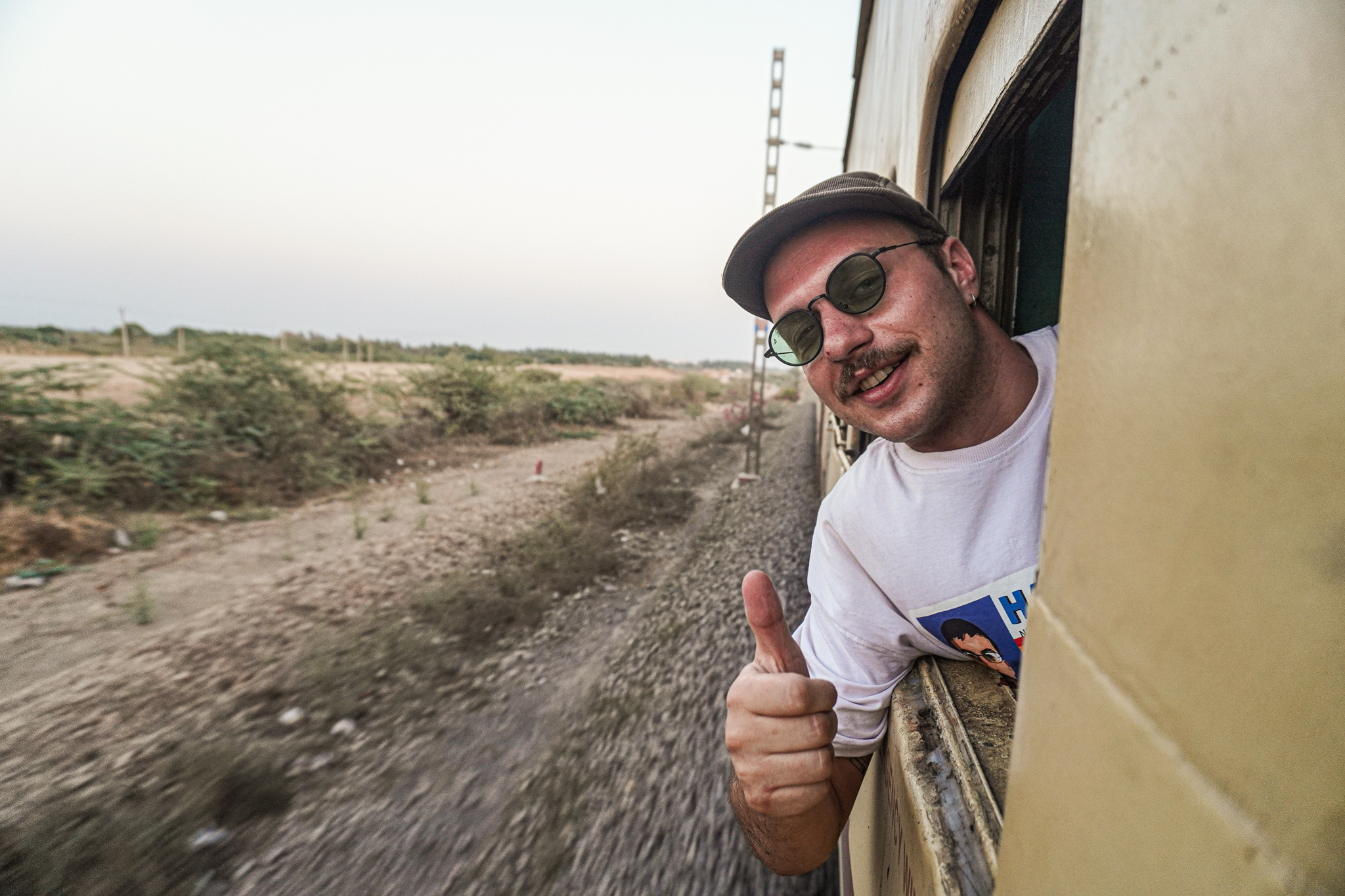
When I arrived in Rajkot to spend my semester at Marwadi University, I did not really know what to expect. Suddenly, I was the only European among 12,000 students. Although the university was quite international, the international community mainly consisted of students from 54 Countries, mainly located in East Africa and South Asia. So I heard the same question almost every day:
"Bro, why did you come to India when everyone wants to go to Germany?"
And honestly, shortly after my arrival, I asked myself the very same thing.

Exchange Semester Hard Facts:
Duration: January to June 2025
Days: 143
Faculty: Business Management
Course: Bachelor of Commerce
Everyday Campus Life
Gujarat is one of India’s five so-called dry states. That means: no alcohol, no nightlife, and a very conservative social environment. The cafeteria served exclusively vegetarian food, usually extremely spicy and something you first have to get used to. But yes, spice tolerance can be trained and it probably should be, for an authentic experience of the Indian cuisine.
Meat was only available in an improvised tin shack outside the campus, and basically only for international students. The place looked like it had been forgotten there and was later declared the “International Canteen.”
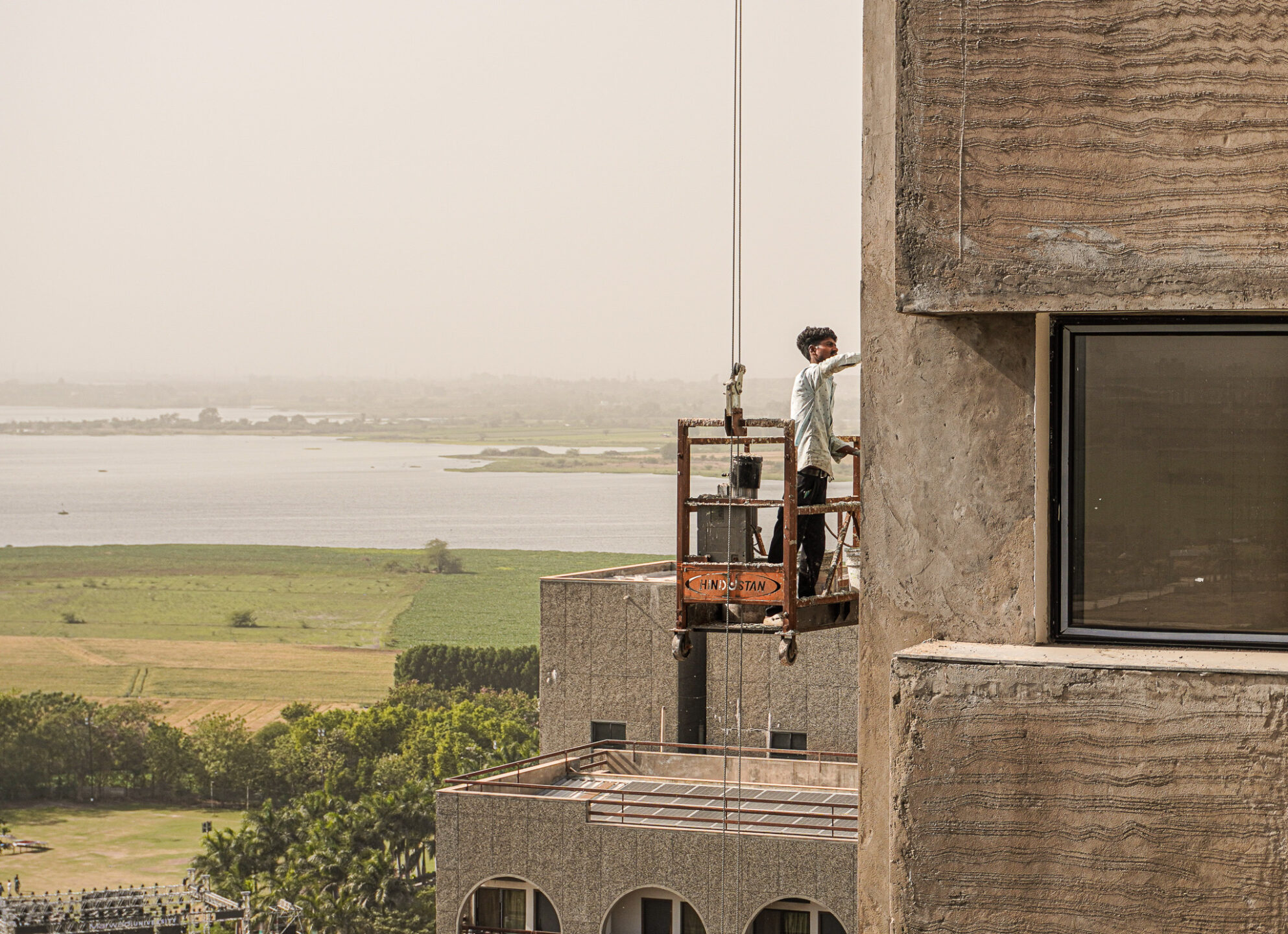
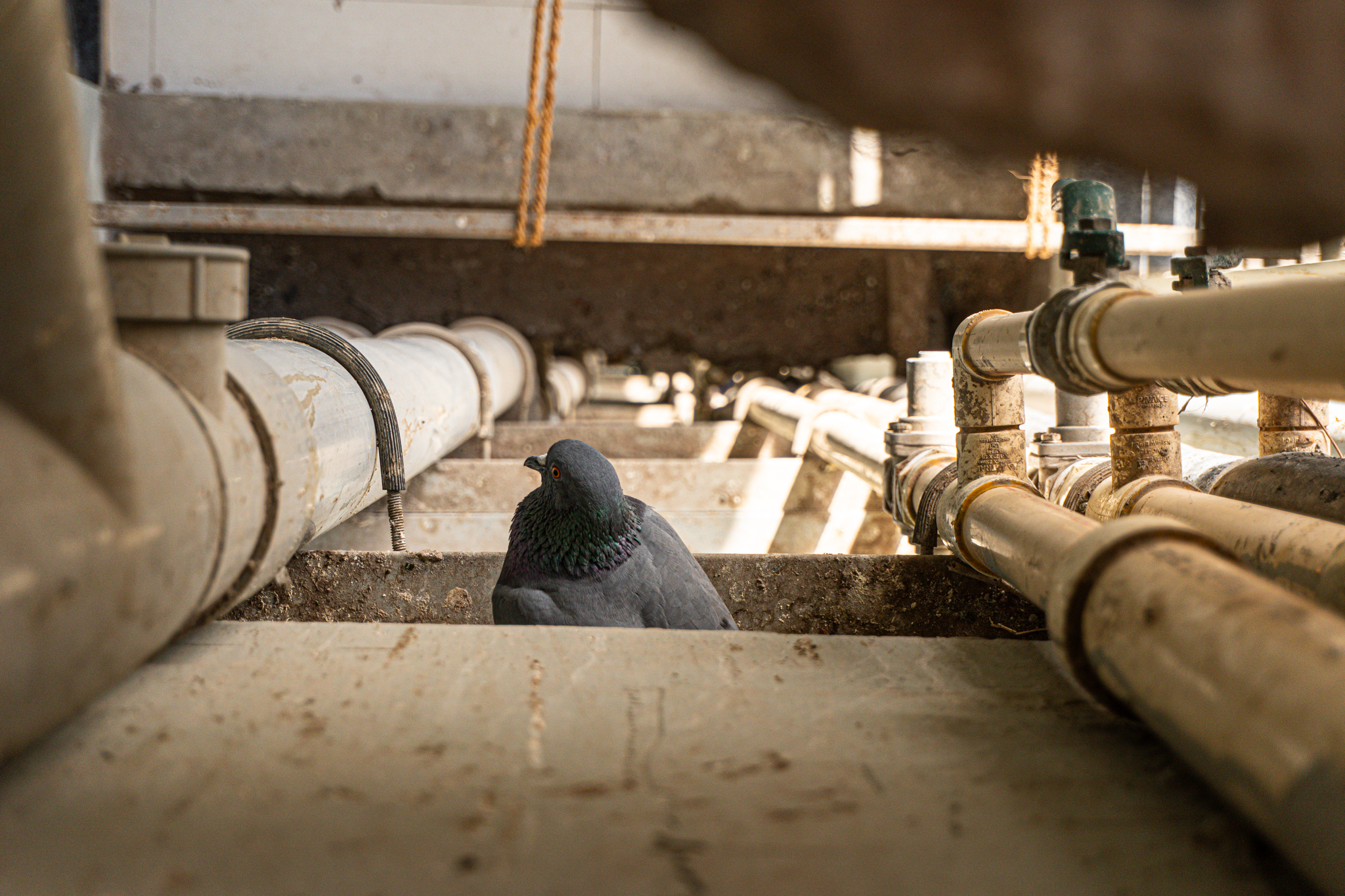
My hostel was still under construction. Some Syrian friends from the eighth floor told me that the year before, people had been living on the unfinished top floor. Even so, the hostel already housed around 1,500 students. I was lucky to have my own room and a Western-style toilet, both absolute exceptions. I did have to share my Room with a pair of pigeons living above my shower though. They kindly distributed nesting material across my bathroom floor every day.
The missing air conditioning became a real issue by April, when temperatures climbed to 45 degrees Celsius and I clearly exceeded my personal heat tolerance for the first time.
A major restriction on my social campus life was the so-called gate-pass system. In order to leave the campus, students had to show a gate pass. International students could issue one themselves; in my case, Hochschule Mittweida only had to approve that I was allowed to move independently outside the campus. My Indian fellow students, however, had to ask their parents for permission every single time. As a result, many of them did not leave the campus for months at a time.
This meant that my social life was almost entirely confined to the campus. For someone like me, a Person used to actively seeking out experiences and movement, this thought was unbearable. Spoiler: I eventually did not manage to stay on campus for more than a week at a time.
Right from the beginning, I had to learn how Indian bureaucracy works. My registration took eight days. Without registration, there was no Wi-Fi, no leaving the campus, and no possibility to buy a SIM card. I was completely offline for a week and could not even tell my parents that I was still alive.
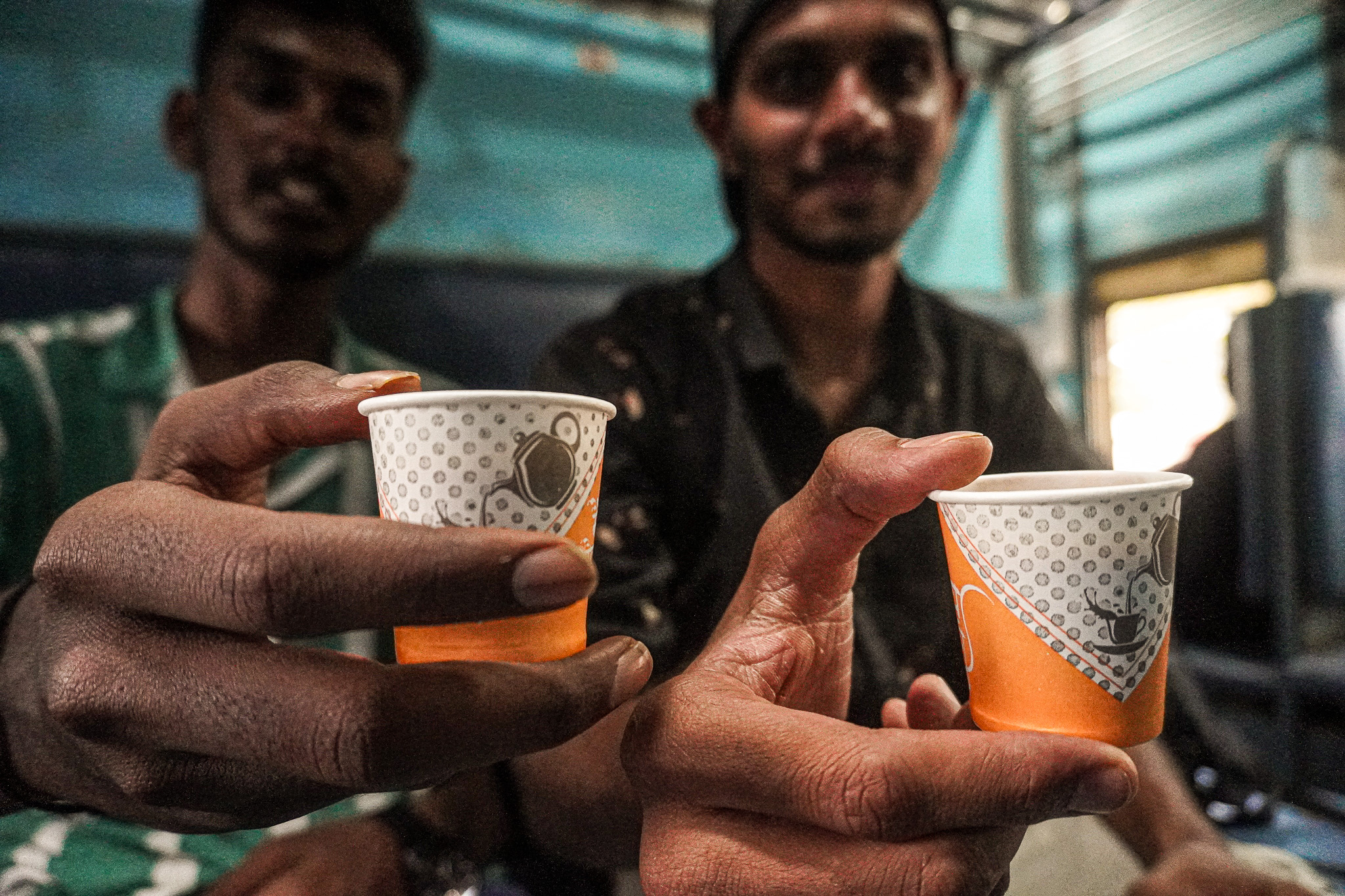
Whenever I asked Ritik, my buddy, when he would help me get a SIM card, he replied every day:
“Not today, tomorrow.”
At some point, I realized that “tomorrow” in India is a very flexible concept. My most important learning: stay friendly, be persistent, and always ask to speak to the person in charge. It takes effort and energy, but in the end it is surprising how much suddenly becomes possible.
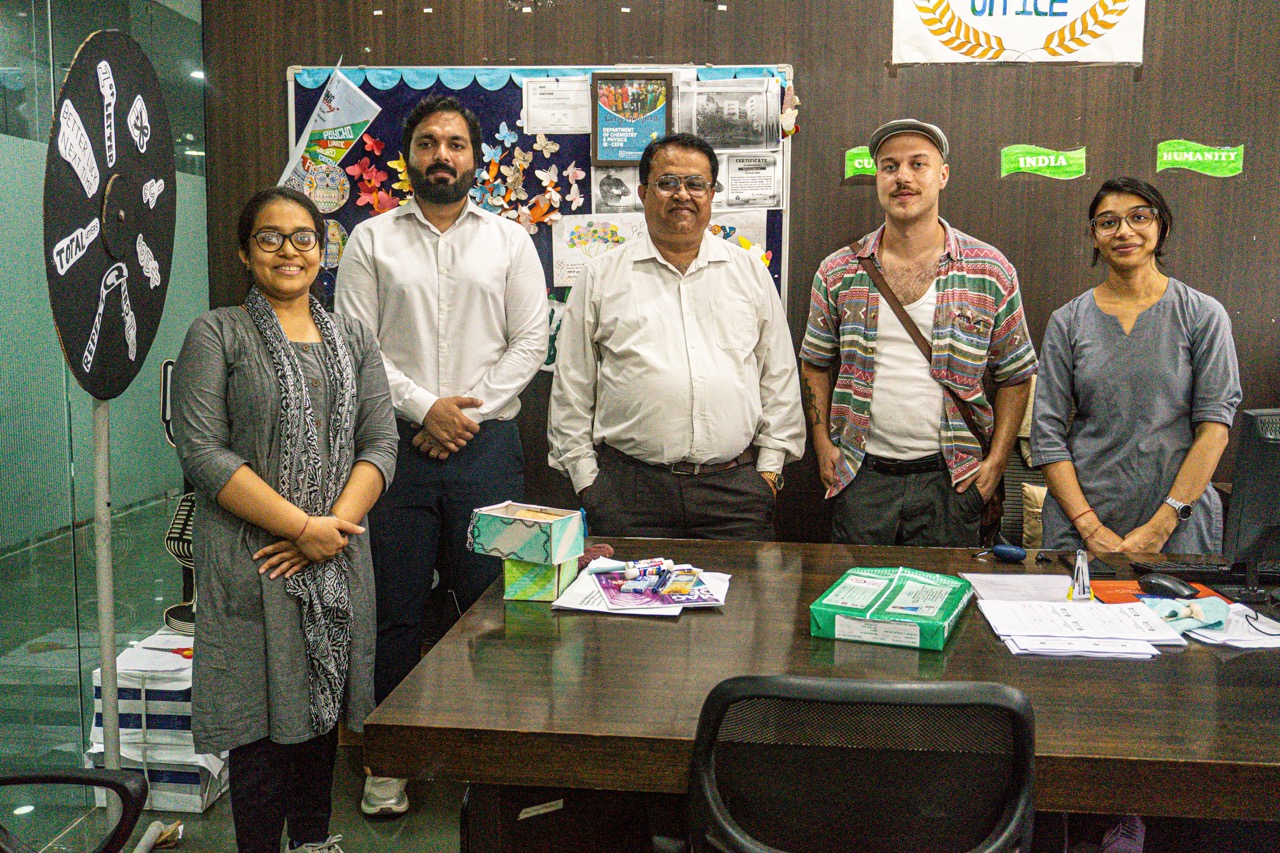
Of course, from a German perspective, the accommodation and campus life may initially sound almost like a fever dream. That is precisely why I would like to emphasize how incredibly warm and supportive the campus environment was. My program dean, Mrs. Dr. Monica, invited me regularly, as did the Director of the International Office, Dr. Nilesh Advani, and his assistant Mansi. I received a lot of support, they connected me well around the international communities on the campus and I would therefore like to take this opportunity to express my sincere gratitude once again.
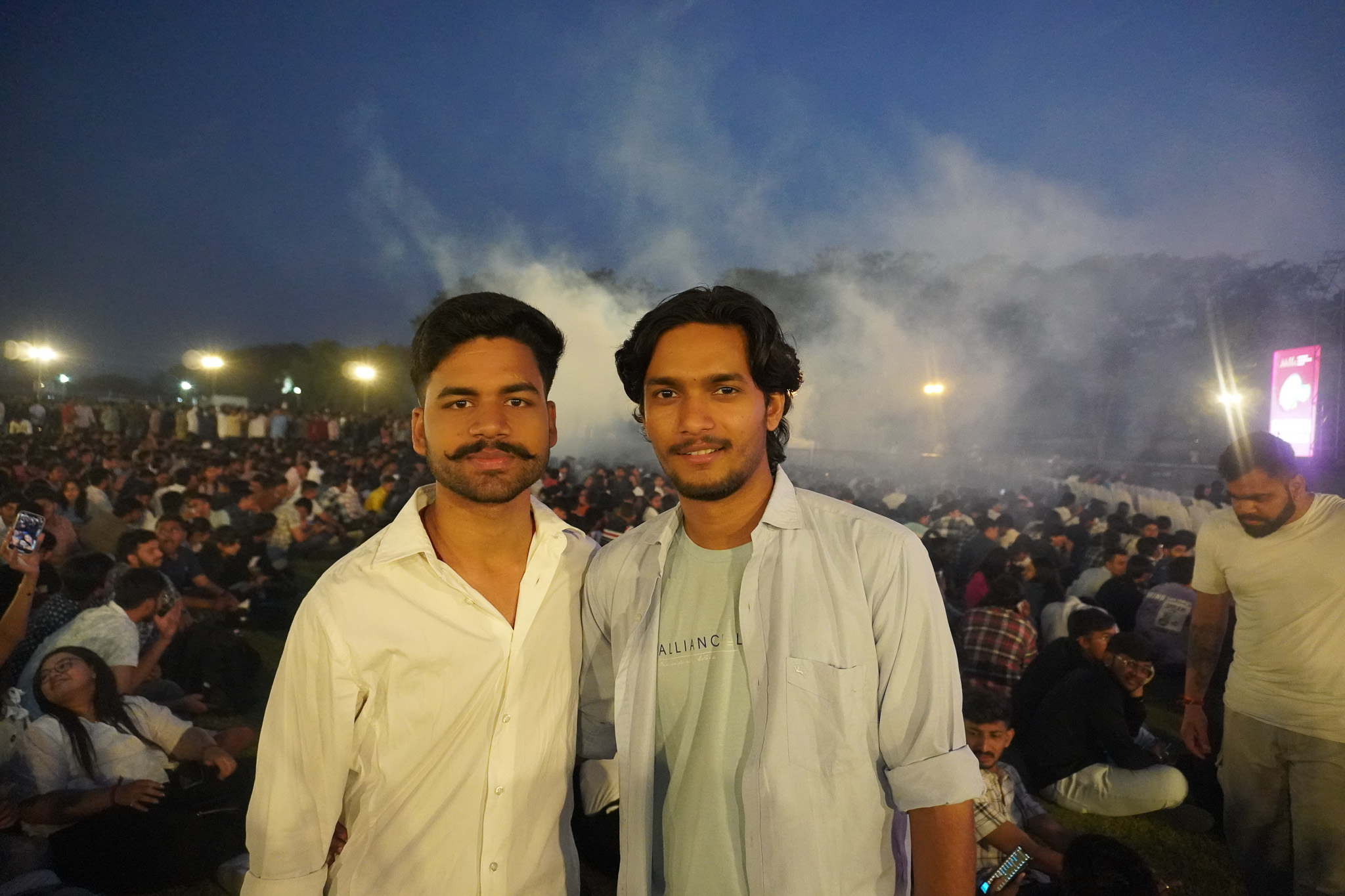
Looking back, one of the most outstanding events at the university was the MU Campus Fest, which took place at the end of February. For three days straight, there were daily stage performances featuring well-known Indian pop artists and comedians.
My personal highlight was Salim–Sulaiman – Indian pop music at its best. Days in advance, my classmates kept telling me: “Johnny, you should not miss that.” The atmosphere was incredible. Every possible moment was used for dancing, and it was there that I truly learned what it means to dance Punjabi style in a tightly packed crowd.
I almost became part of the festival myself. On the second day, there was a fashion show where self-organized student teams designed and presented runway performances. For many Marwadi University students, this fashion show was one of the highlights of the entire festival.
One group chose the theme “Harry Potter”, and apparently I fit the role of Dumbledore quite well. I was invited to auditions and several rehearsals in a gated residential complex in downtown Rajkot. In the end, my runway performance did not happen because my time resources collided with the very ambitious rehearsal schedule of my Indian group.
After getting used to life on campus, I had enough of my limited daily routine. I wanted to get out – properly. After all, my expectation for this semester abroad was to experience India.
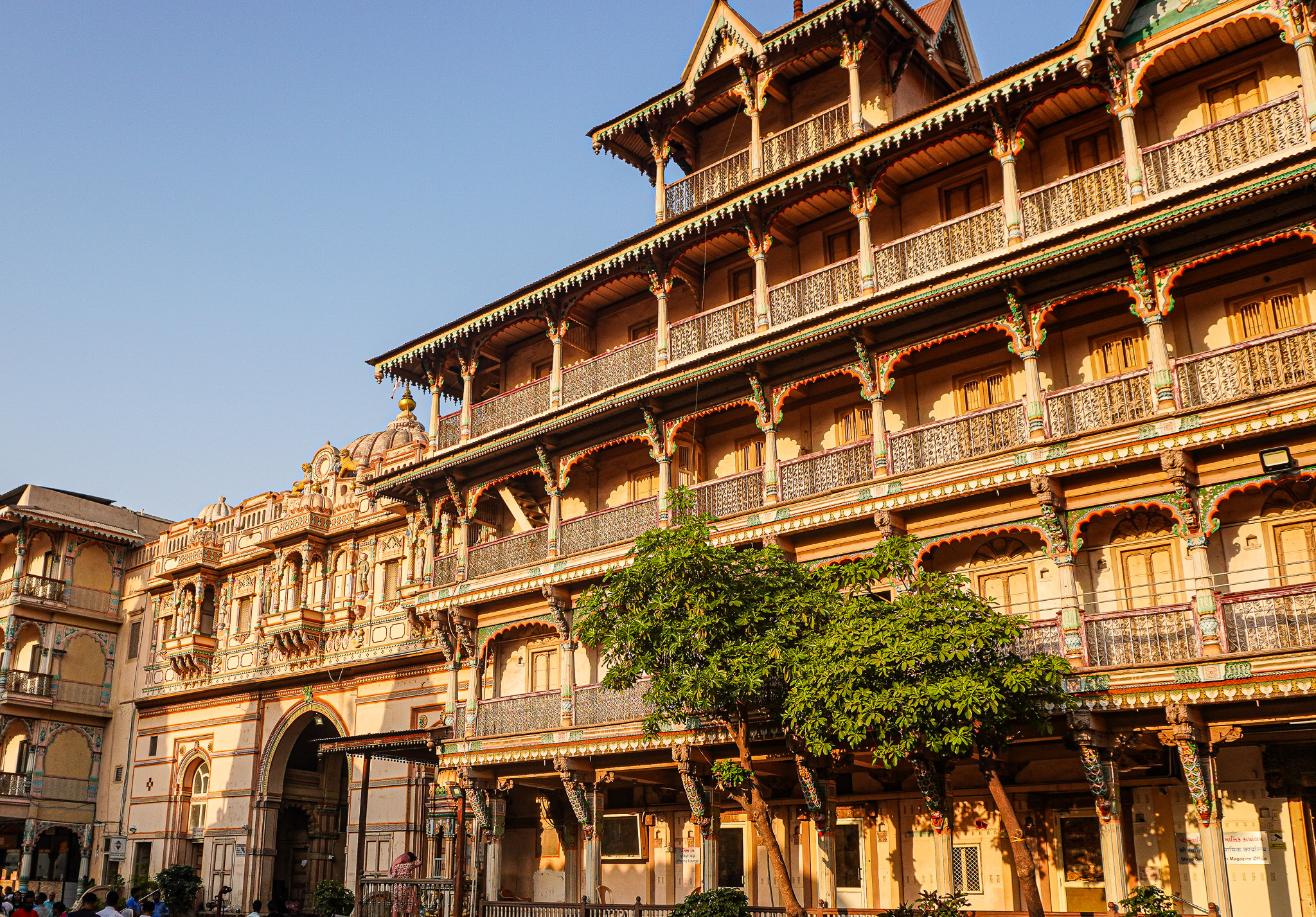
So, I started writing a bucket list for weekend trips. In February, I visited the UNESCO World Heritage city of Ahmedabad, experienced the trendy area Bandra West in Mumbai, went psytrance raving in Goa, and in March I threw colors during the Holi festival in Pushkar.
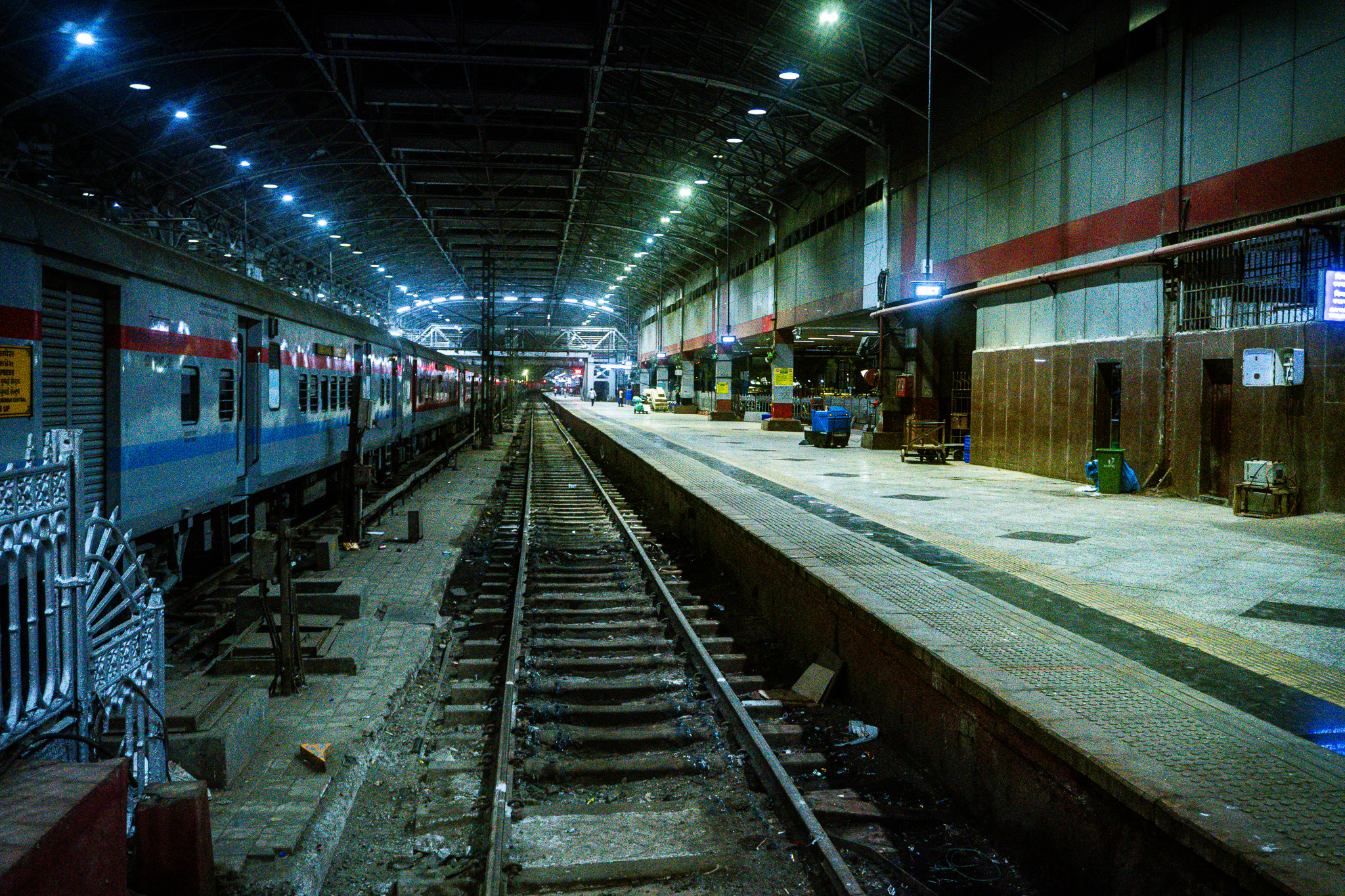
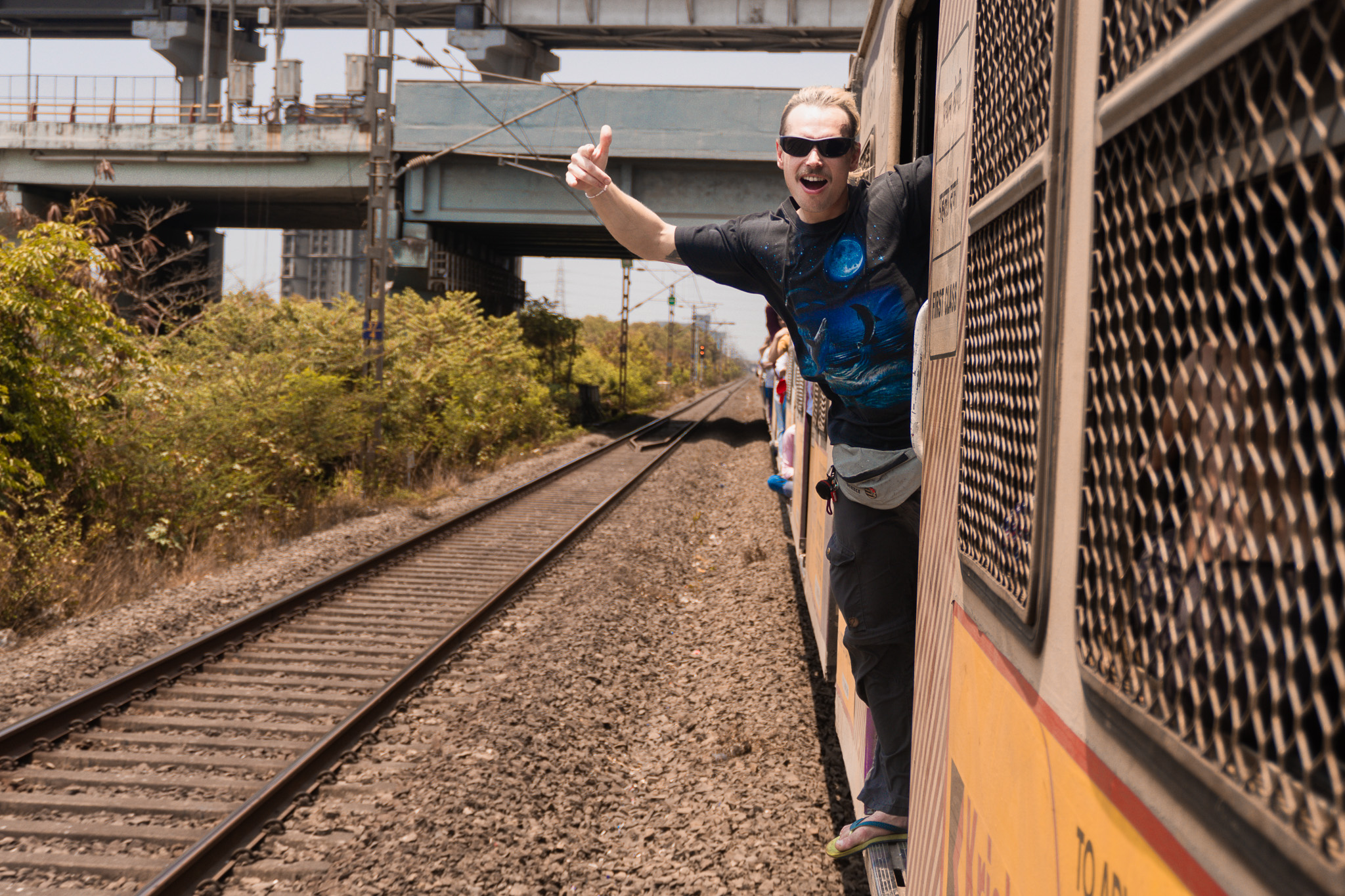
Distances in India are enormous, but thanks to the world’s fourth-largest railway network operated by IRCTC (Indian Railway Catering and Tourism Corporation), the country is relatively easy to travel. Train travel in India is however always an adventure in itself. The most important rule is to book tickets well in advance. On high-frequency routes, tickets are often sold out a month ahead. If no tickets are available, you can be waitlisted, but the system of waiting lists and confirmations is, in my opinion, quite complicated.
On one occasion, I received a RAC confirmation for my trip from Mumbai to Rajkot. RAC stands for Reservation Against Cancellation and means that you are theoretically allowed to travel. In practice, this meant sharing a 50-centimeter-wide bed head-to-foot with another Indian passenger for ten hours – a situation that he probably found even more uncomfortable with a foreigner than I did.
A Piece of Sachsentrance in Mumbai
At the end of May, there was one event that completely thrilled me: Sachsentrance playing in Mumbai.
A piece of home – but in India. I was craving a contrast to the conservative campus life.
In Mumbai, I met Pico from Sachsentrance. We first ended up on the rooftop of a high-rise building in the financial district, where DJs and bookers from Mumbai had invited to play cricket together. Cricket is India’s national sport, and I had already been invited to play several times on campus. My personal conclusion about cricket: I still do not understand the rules.
Back on the rooftop in Mumbai, it quickly became clear that the social circles around us had little in common with those of my fellow students. Everything felt more glamorous, more connected, more Western.
That weekend, we went to two clubs. Entry cost around 30 euros. A bottle of rum cost 70 euros. I immediately thought of the cleaning lady at my hostel, who once told me that her monthly income was around 60 euros.
The hospitality that evening was overwhelming. People took great care of us and clearly wanted to show what they had to offer. I was aware that everyone in this bubble was privileged and wealthy. In terms of values and worldview, however, I found more familiarity and shared ground than at my university, which felt good halfway through my semester abroad.
At the same time, the experience once again made me realize how privileged we are in Germany. We are able to develop our personality early on and choose how we want to live our lives.

The Highway to Heaven
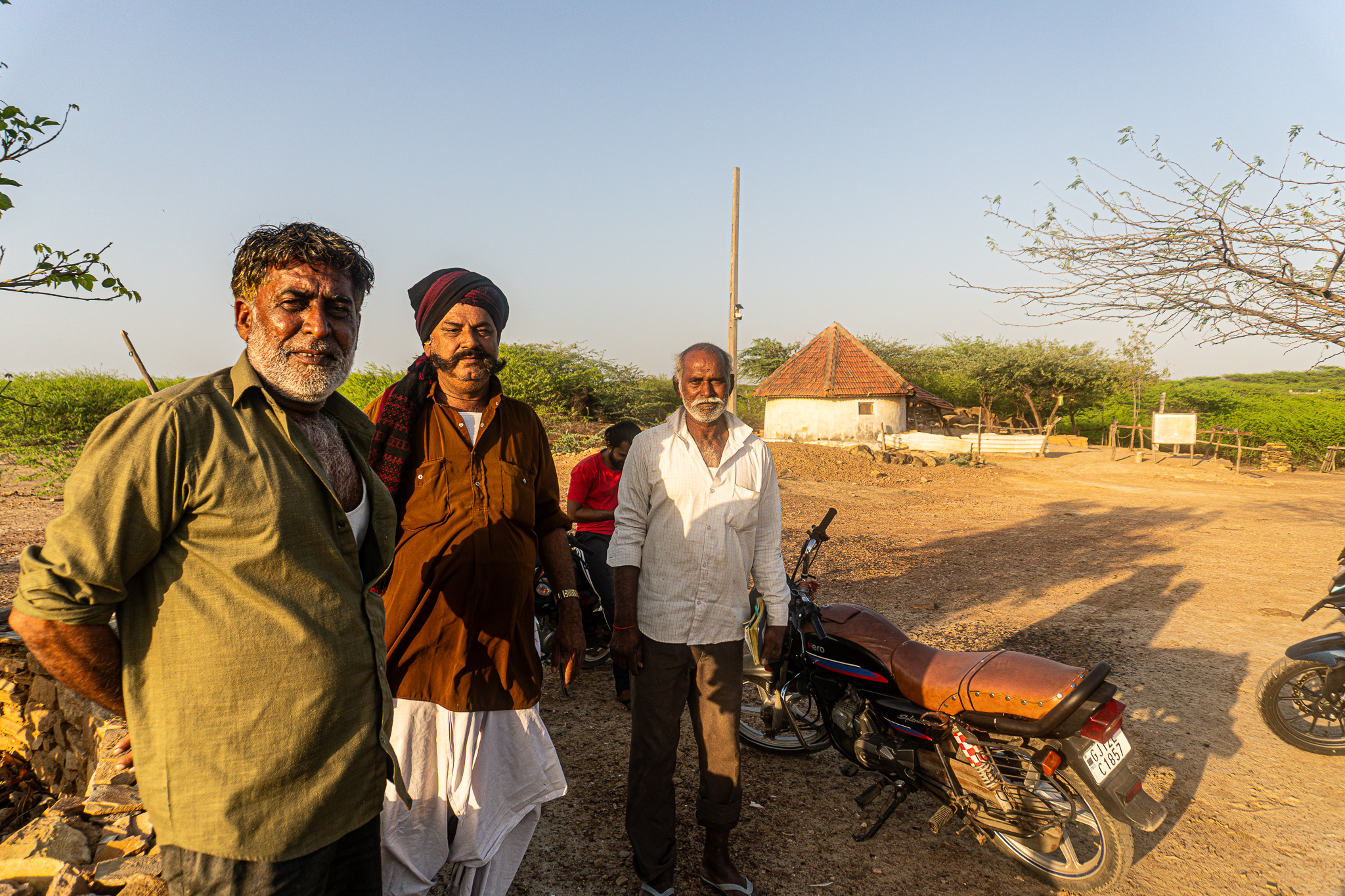
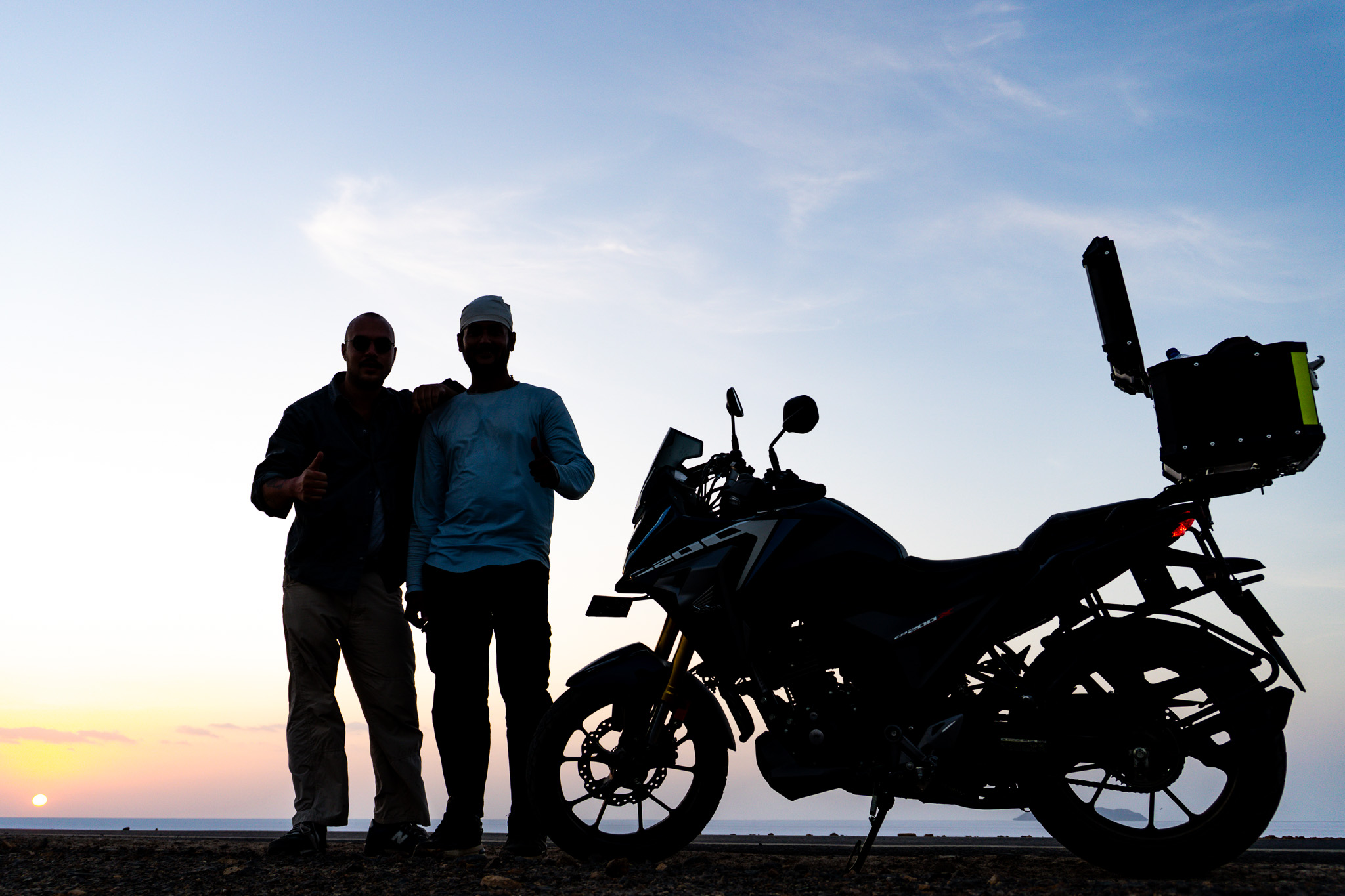
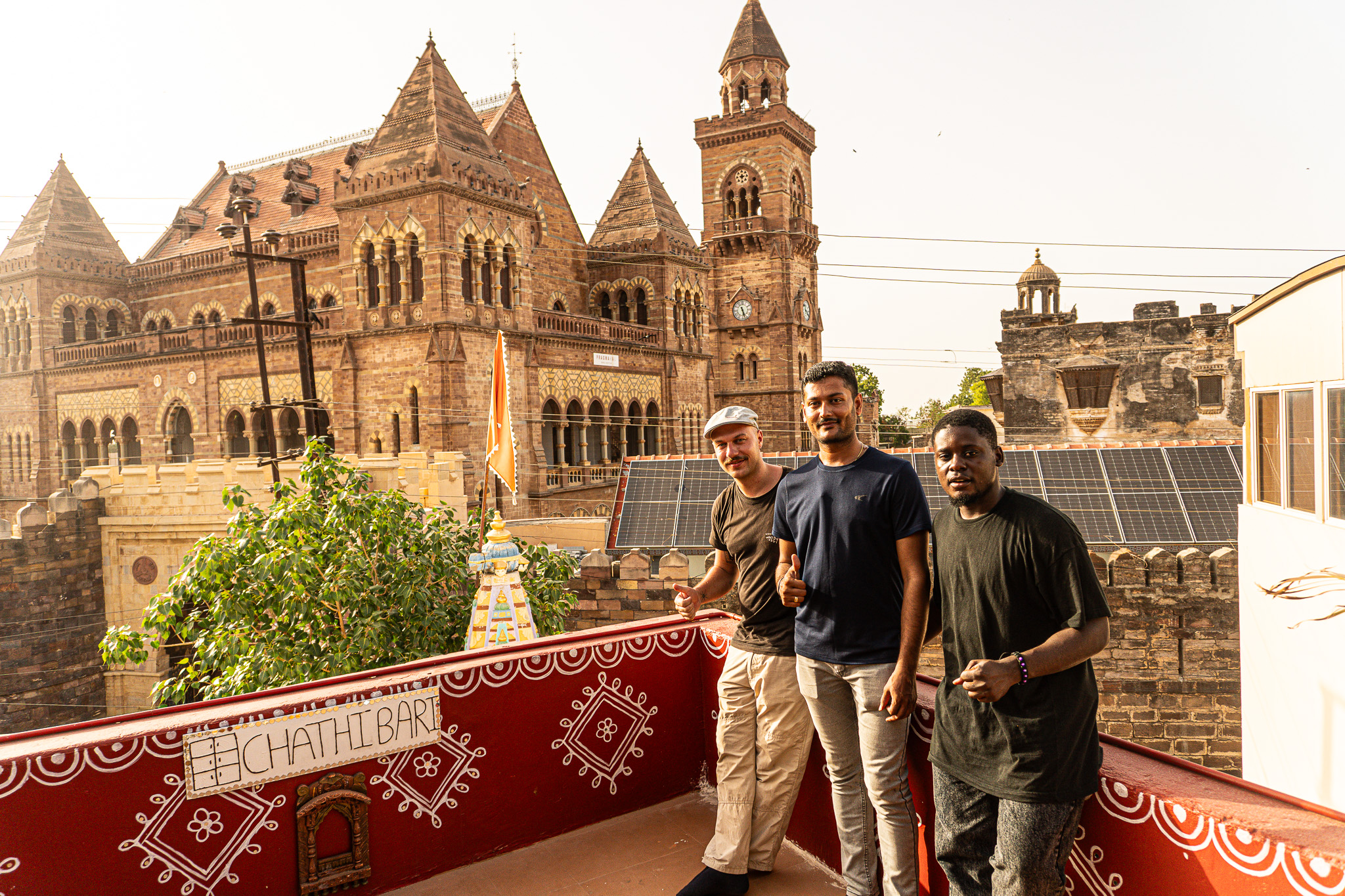
One experience that truly challenged my intercultural competence was my trip to the Great Rann of Kutch, also known as the White Desert, shortly after tensions between India and Pakistan escalated again. The White Desert lies in the border region between the two countries, which meant that as a foreigner I needed a special police permit.
I started in Bhuj, in the Kutch region, where the motorcycle rental owner told me that I would need official permission. At the West Police Station, I was told that only the East Police Station could issue the permit. At the East Station, they said the West Station was responsible. But that would no longer work, as the next day was a public holiday. Maybe the day after.
Only when I asked to speak to the superior did things suddenly move quickly. Thirty minutes later, I had the permit in my hands. At this point, I would like to sincerely thank my host in Bhuj – without him, I would not have made it there.
Vipassana - Ten Days of Silence, Meditation and and my unexpected return to Germany
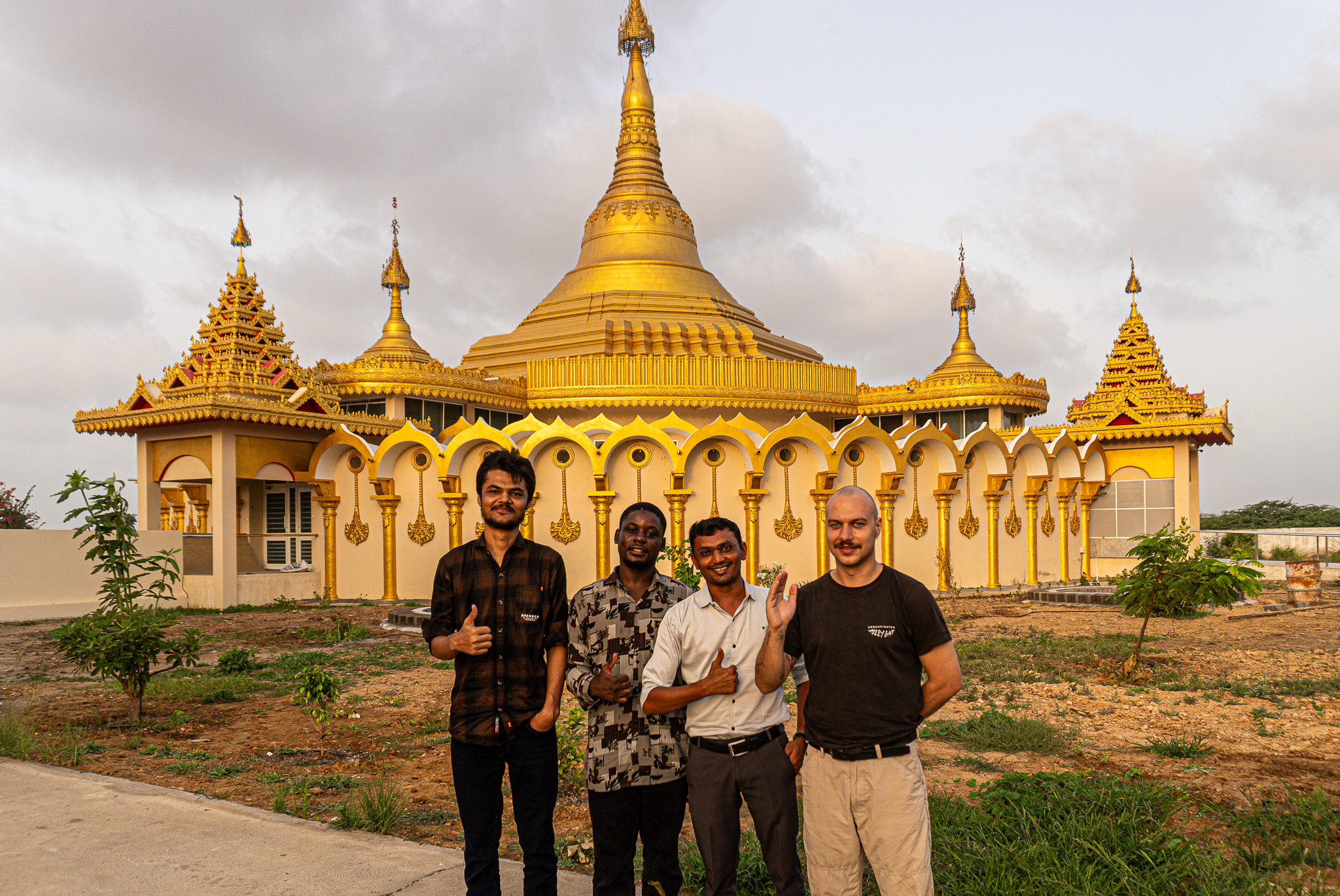
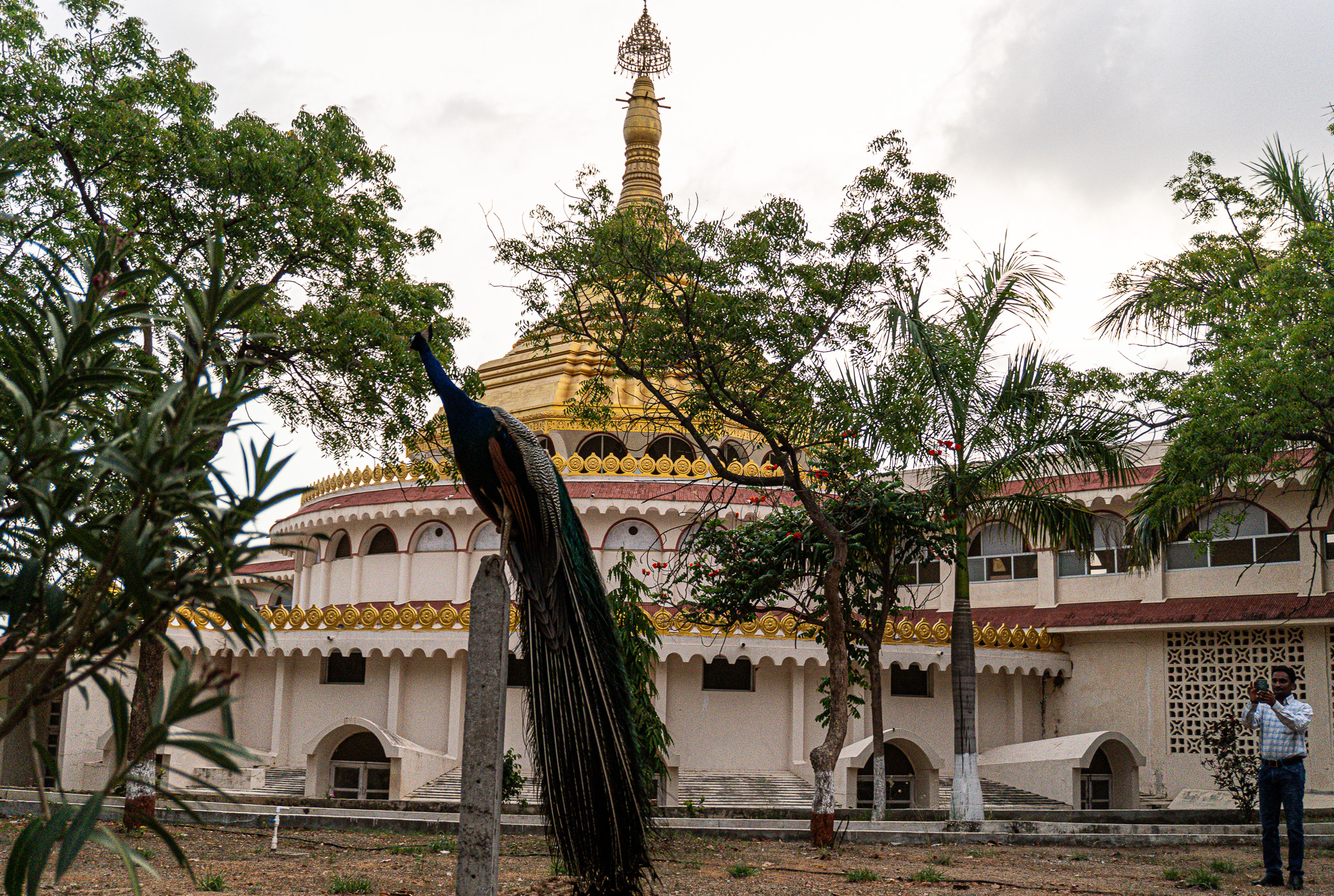
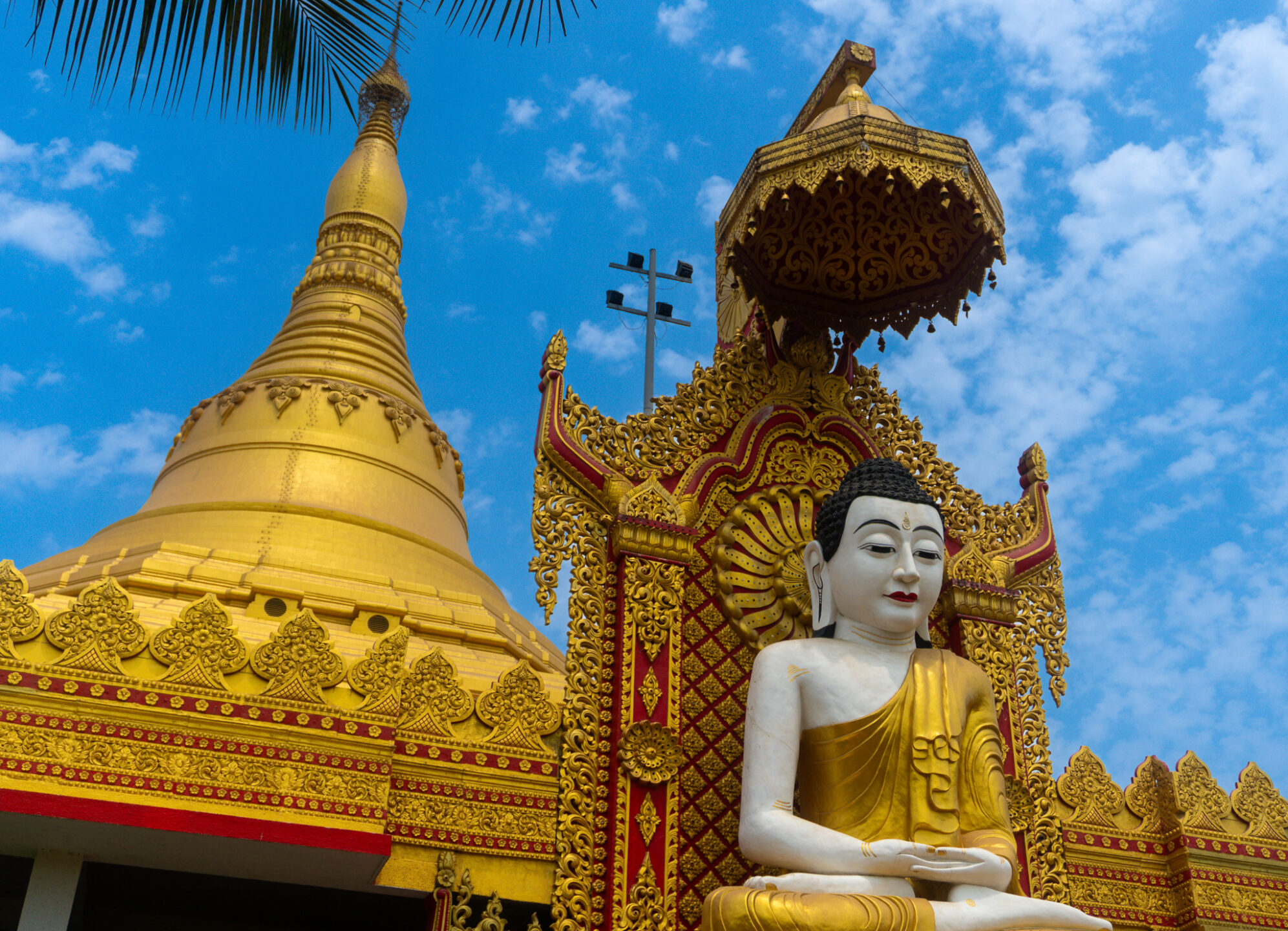
The final major Experience of my stay in India was Vipassana. My University friend Excel from Zimbabwe had told me about it, and after visiting the Global Vipassana Pagoda in Mumbai with Pico, I knew: this is something I want to do. So i applied for a 10-Day Course at Dhamma Sindhu.
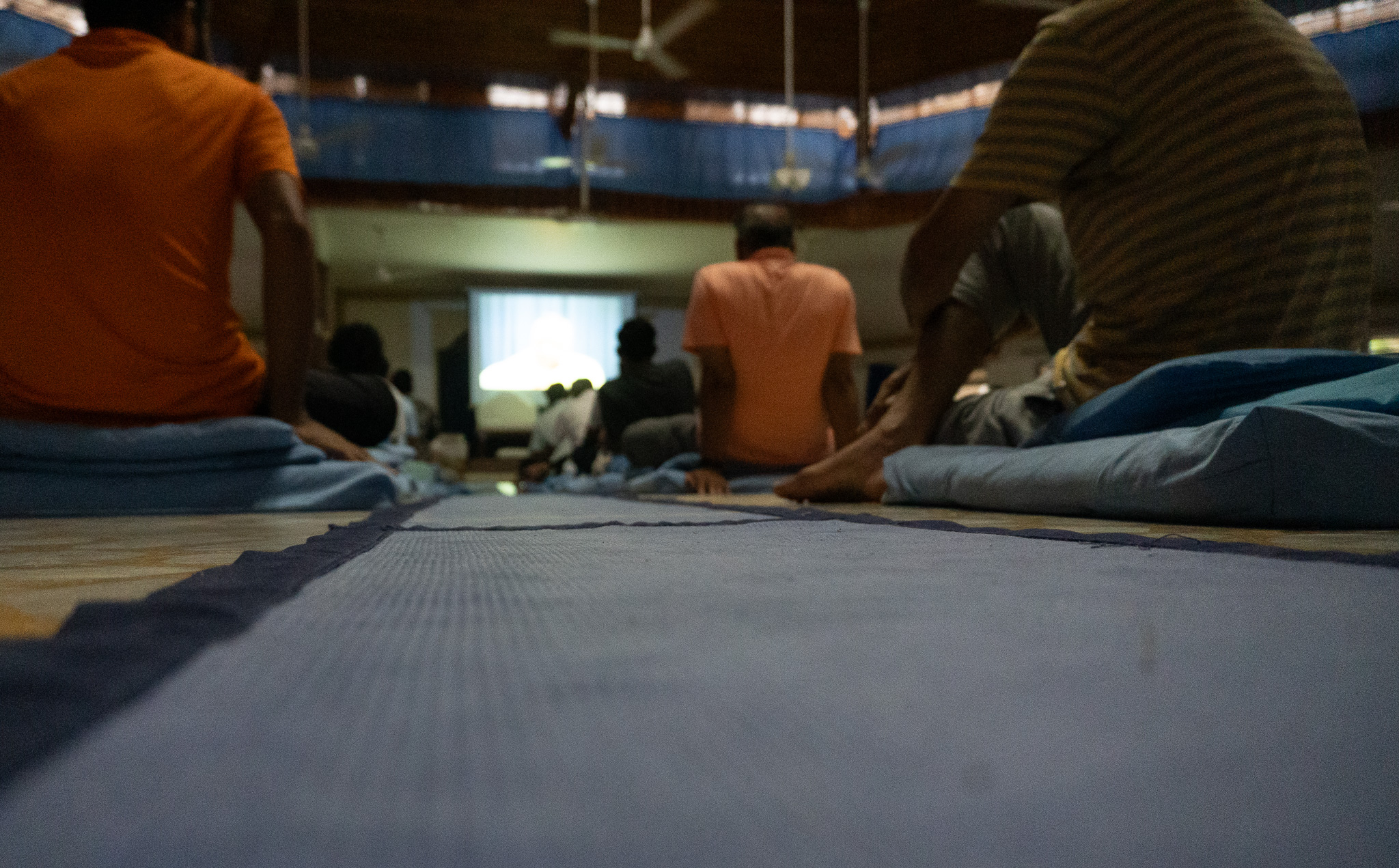
At the meditation center, men and women were completely separated. We were around 50 men sitting together in one large hall. On Day 0 from 10 At 6 p.m., the silence began.
The first two days were brutal. Fighting boredom, aching legs, no distractions at all. I had assumed that maybe people would secretly whisper. I was wrong. Everyone took it extremely seriously.
Then, on the second day, during an Adhitthana sitting, a Dhamma server tapped me on the shoulder and said:
"Your brother contacted us. Your grandmother died."
The message completely pulled me out of meditation. In the evening, the teacher called me in. We talked for a long time, and he said:
“From now on, this course will be very beneficial to you.”
I stayed.
The next eight days were hard, but they gave me something I could not have found outside in India: calm, structure, and a clear space to process my grandmother’s death. No distractions. No noise. No chaos.
Looking back, it was exactly the right decision.
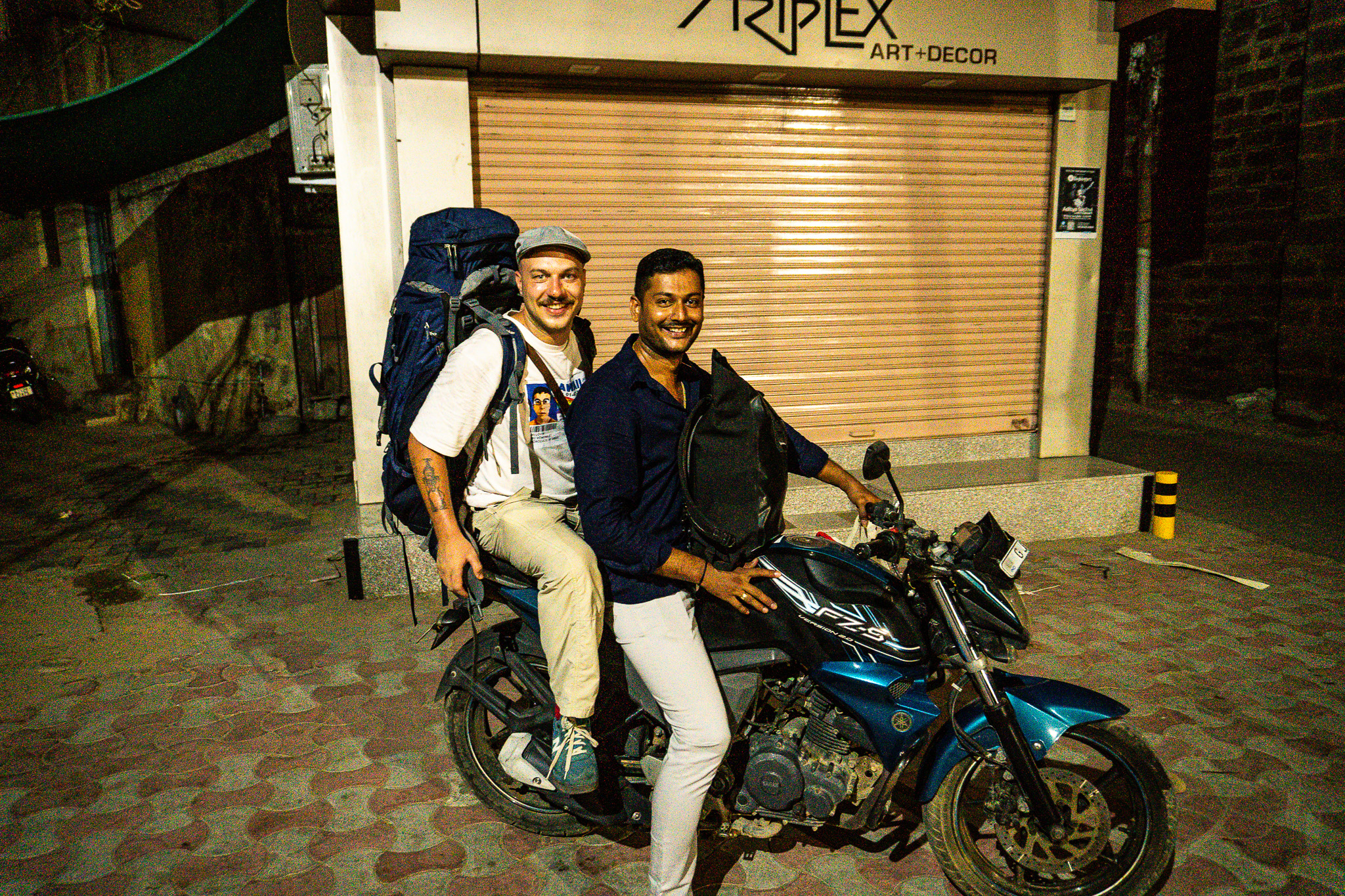
"India is not for Beginners"
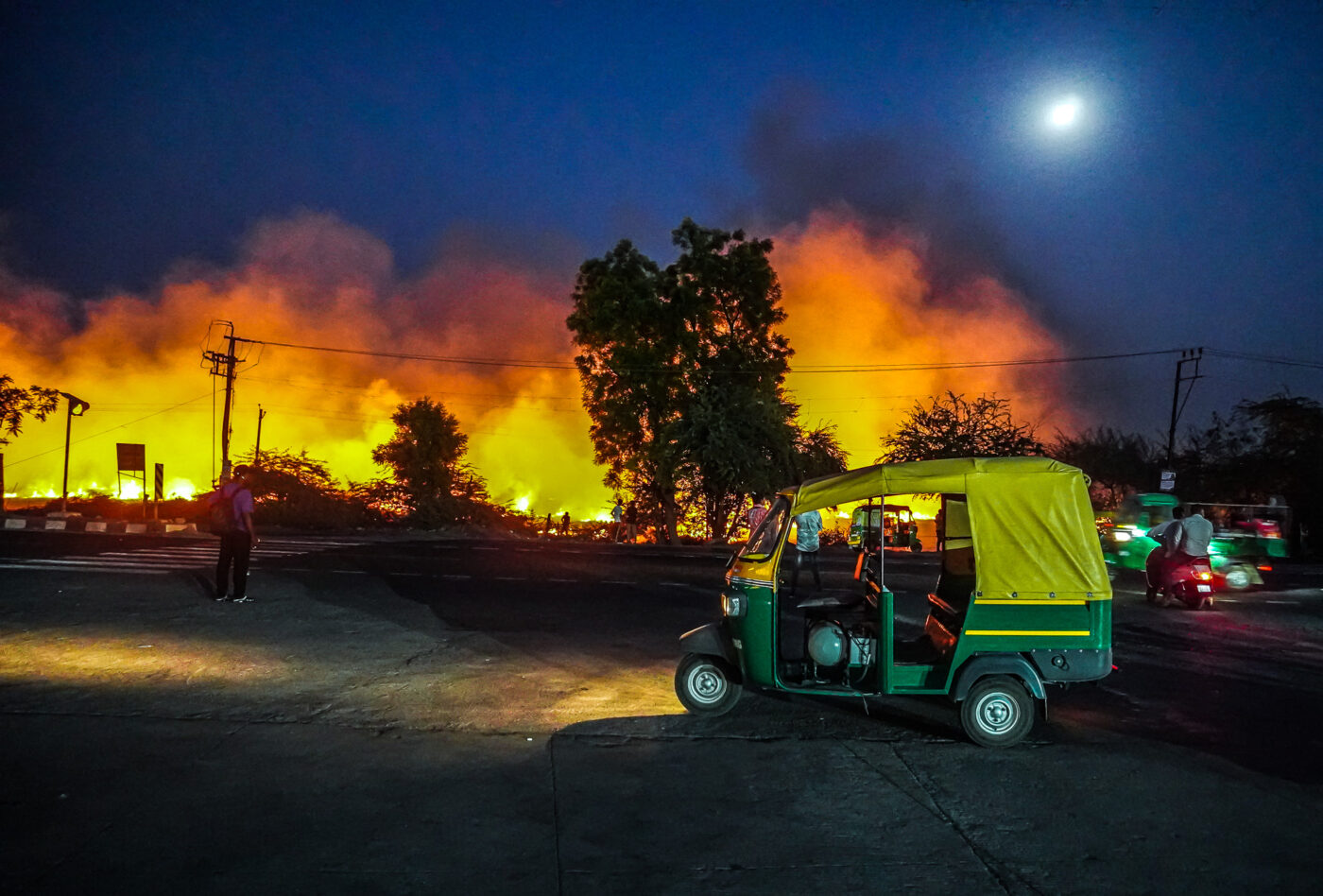
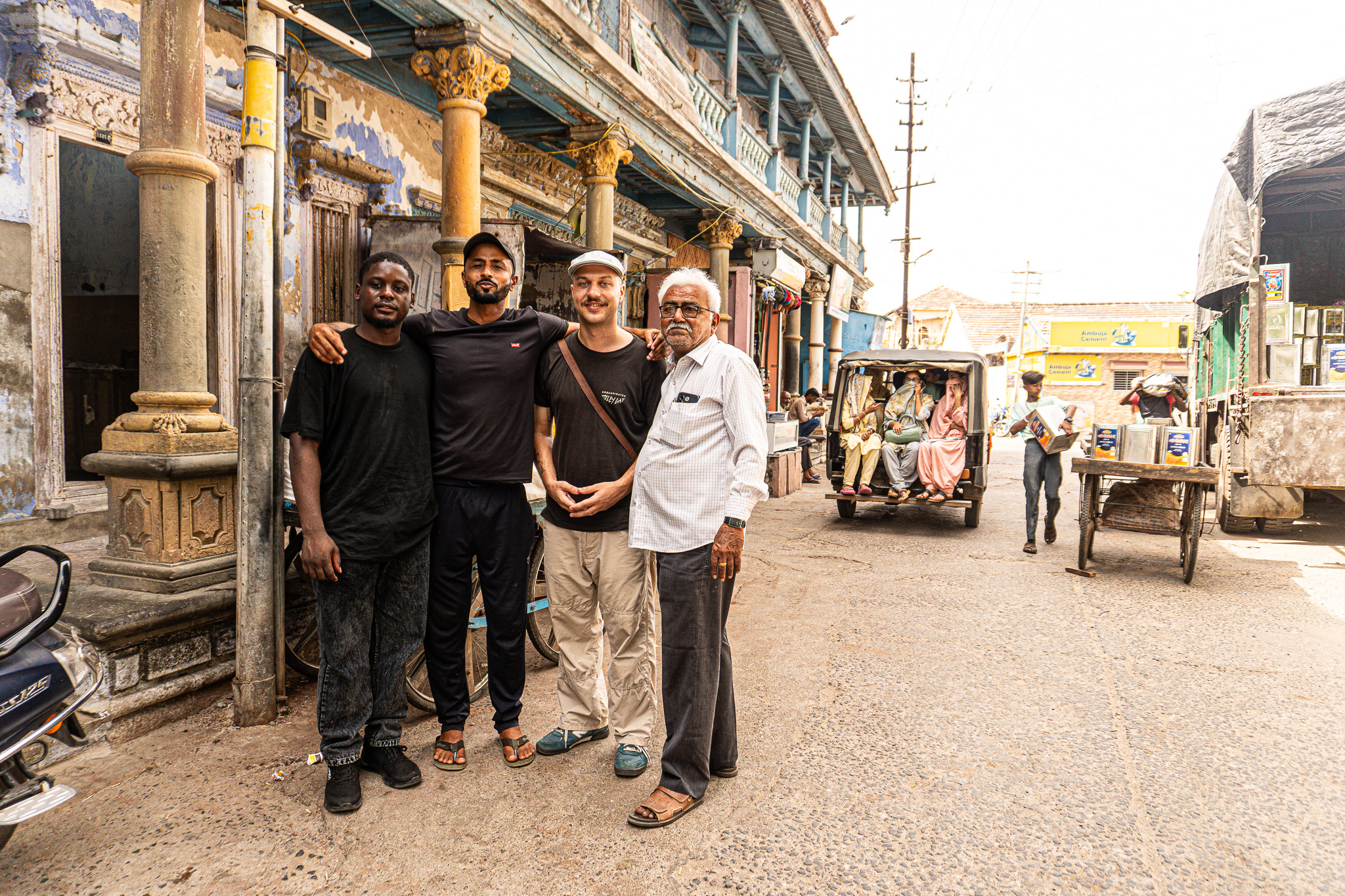
a sentence that accompanied me throughout my entire semester and that I can fully confirm today. India did not welcome me gently; instead, it confronted me with the biggest culture shock I had experienced up to that point. Between concrete university buildings in Gujarat, a very conservative and restrictive campus routine, experiences somewhere between the Holi festival in Pushkar, Sachsentrance in Mumbai, and witnessing the India–Pakistan conflict firsthand — and finally ten days of complete silence during a Vipassana meditation.
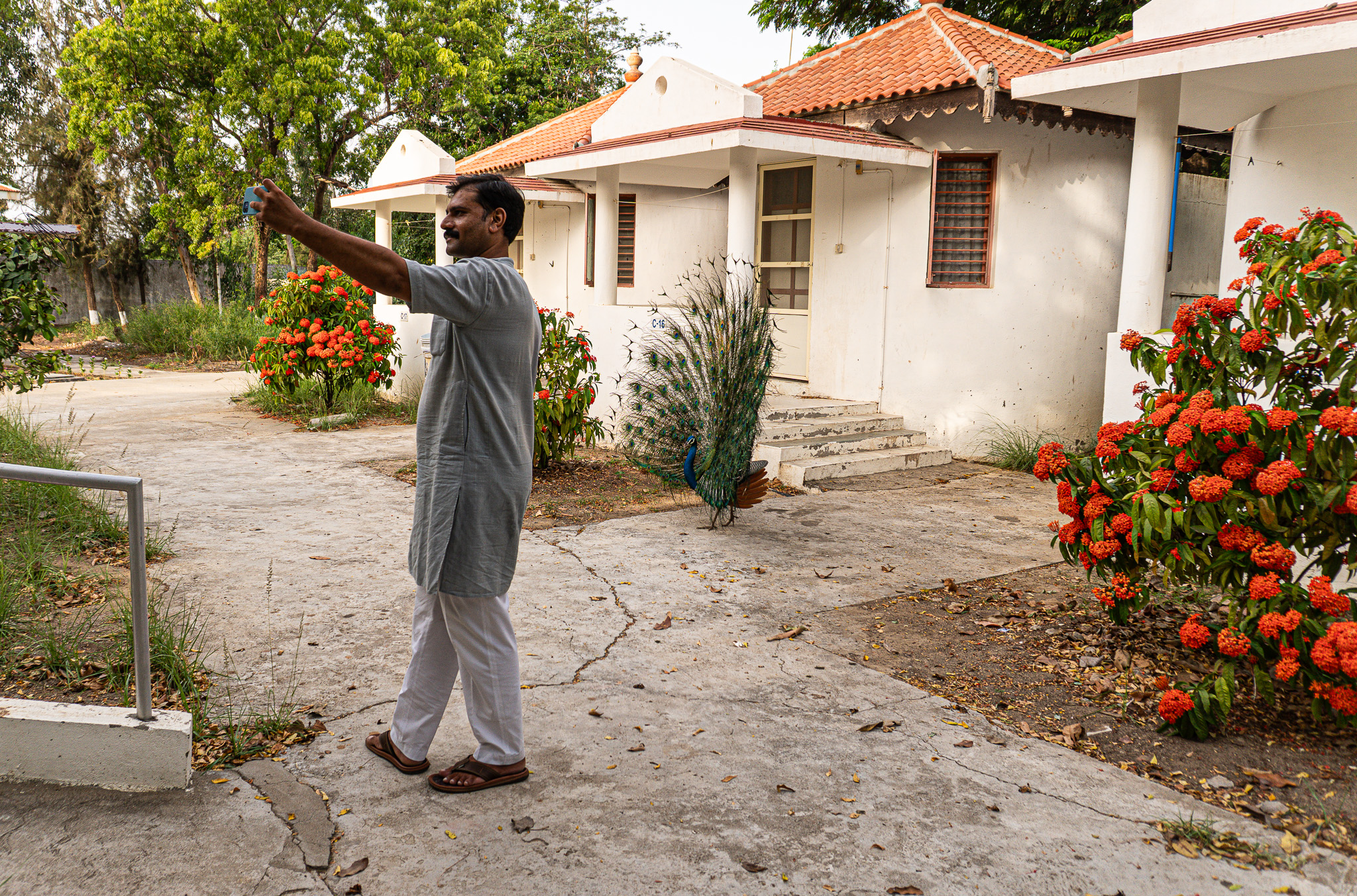
It was loud, hot, chaotic, overcrowded, and at times absurd. Yet that was exactly where the lesson lay: learning to accept, to let go, and to allow oneself to be inspired by this incredibly rich, diverse, and deeply spiritual culture. Looking back, this semester was precisely what I had been searching for. And almost ironically, the culture shock I experienced upon returning to Germany was hardly any smaller than the one I had felt upon arriving in India.