
Life, Flipped Upside Down:
My Semester in Seoul
First Impression: A World Apart
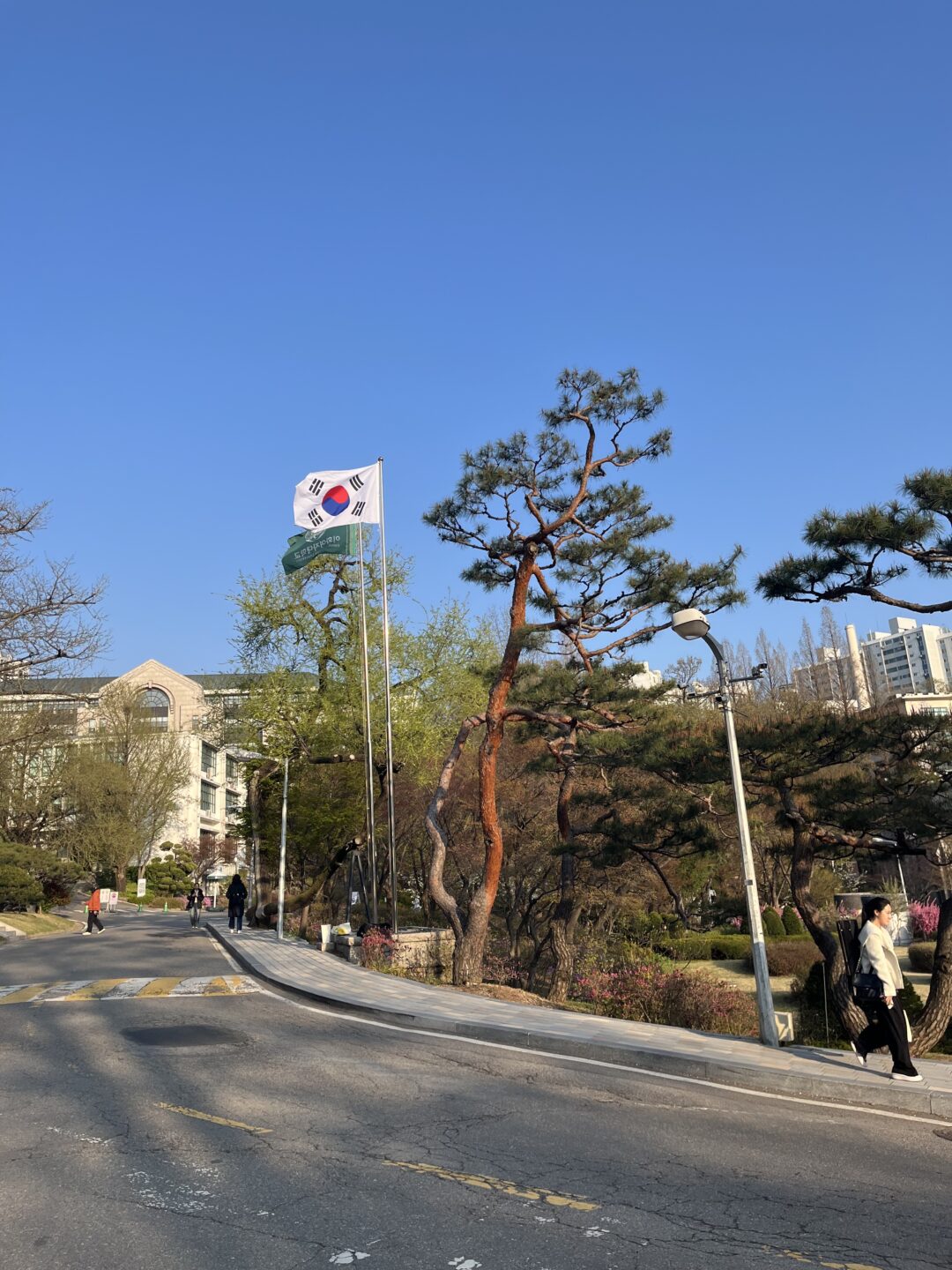
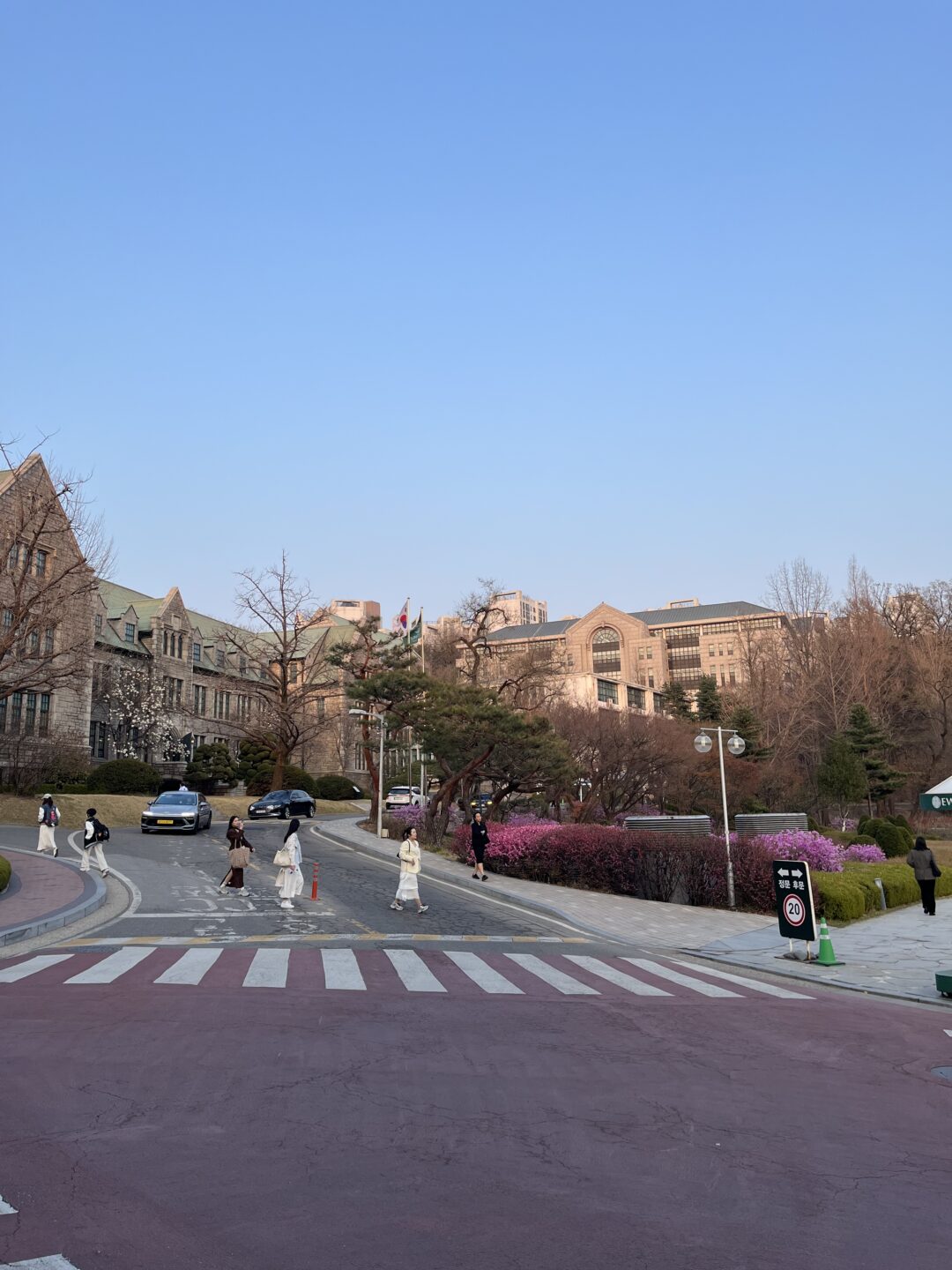
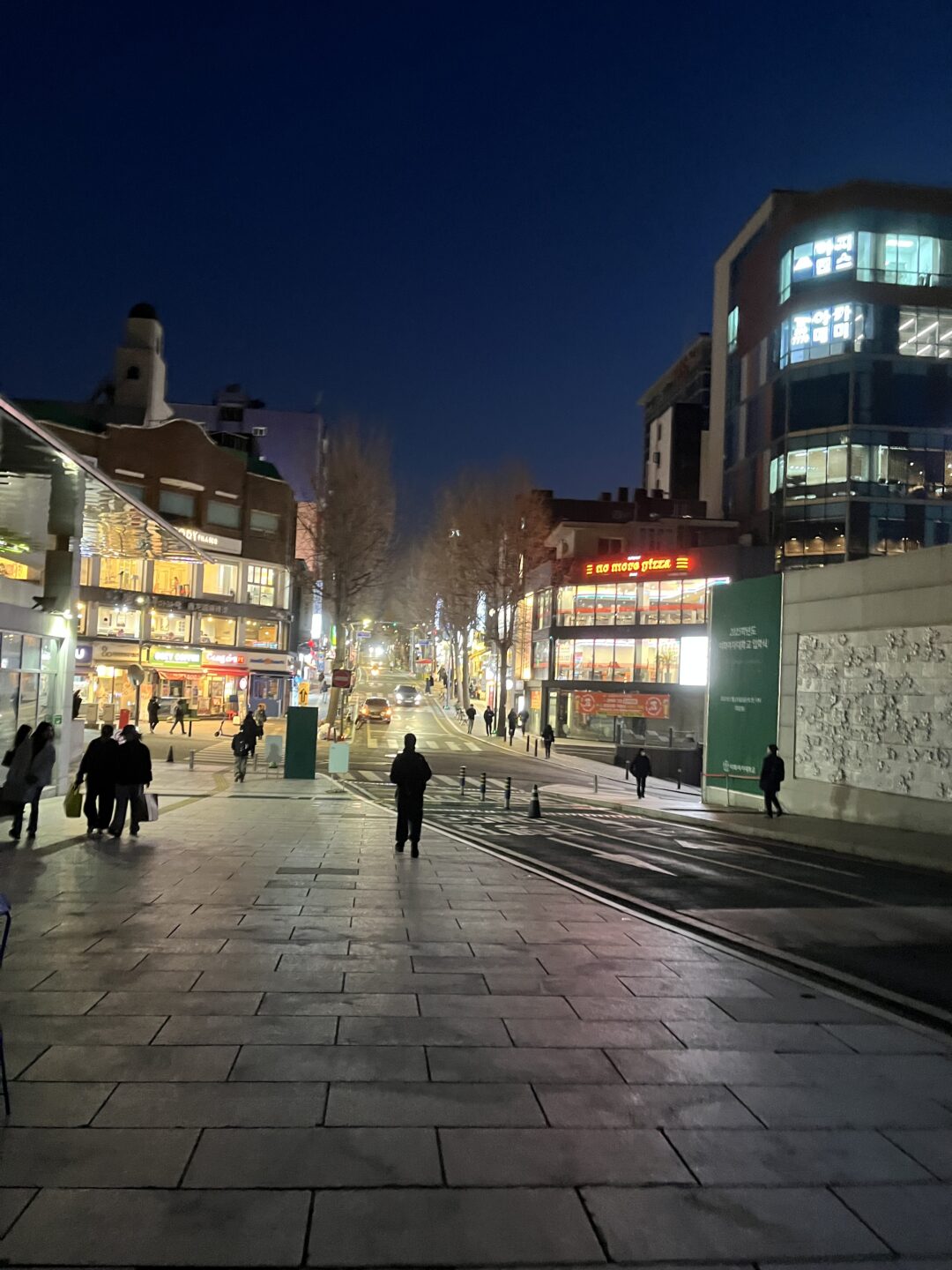
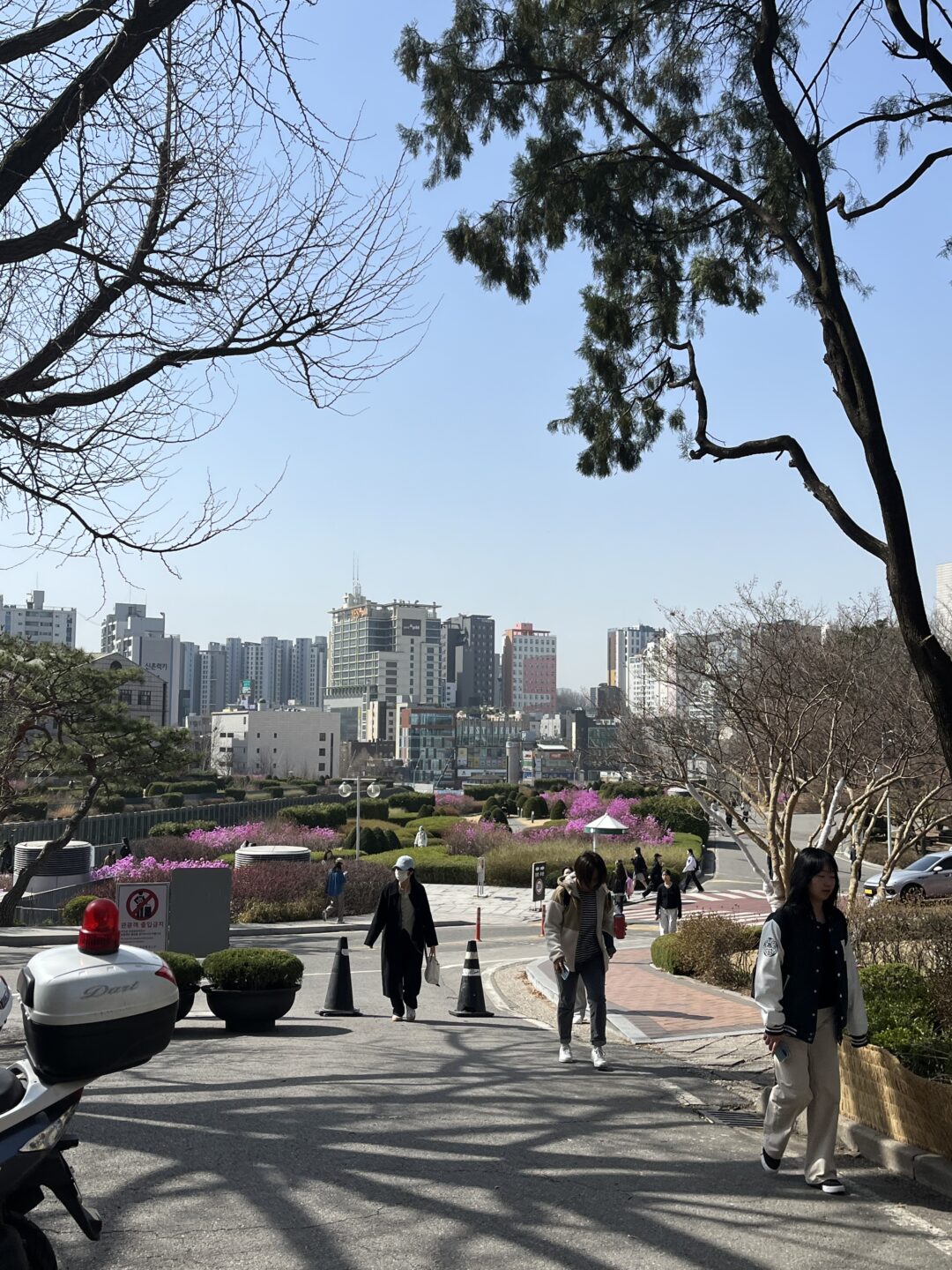
When I first arrived at Ewha Womans University, my new home for the next few months, I was struck by a profound sense of awe. I knew the university was large, but standing there in person was something else entirely. In the heart of Seoul—a city where concrete high-rises and endless colorful signs crowd together—the campus felt like a different world.
The first thing that caught my breath was the ECC. It looked like a massive valley carved straight into the ground, a deep path of glass and stone that seemed to swallow the city’s noise. In a metropolis where every inch of space is filled with buildings reaching for the sky, Ewha was surprisingly open, grand, and green.
The Dorms: Trading Privacy for Shared Space
The first real jolt of change wasn't the language or the food—it was my new address. Trading the quiet certainty of my own room in a small German village for a shared dorm in Seoul flipped a switch in my daily life.
At first, it was okay. I had shared rooms before on vacation or at summer camp. But as the university routine settled in for the long haul, the reality began to wear on me. The lack of privacy became a constant, low-grade stress. I was always aware of the other person in the room: Is she sleeping? Is she studying? Is she on the phone with her family? Mornings meant tiptoeing around, trying not to wake her. The underlying feeling was the strangest part: the door to my most private space could open at any time, and I had no control over it. My sanctuary had become a permanently shared territory, and that was the most foreign feeling of all.
A Connection in Compressed Space
Yet, within this compressed space, I found an unexpected expansion. I was incredibly lucky to have a wonderful roommate from Taiwan. What could have been a tense negotiation of boundaries turned into a shared journey. Our evenings often ended in long talks about university life, our home countries—Germany and Taiwan— or anything else really.
Our friendship spilled out of the fifteen square meters: we went to the Korean jjimjilbang sauna, spent evenings watching the lights dance along the Han River, and exchanged snacks from our homelands or went out to eat together.
Restaurants & Convenience stores insted of Kitchens
If the shared room redefined my privacy, the missing kitchen redefined my independence. It felt strange, not being able to just walk into a kitchen and make myself something to eat whenever I wanted. That simple, daily act of self-care—choosing, preparing, cooking—was gone. In its place was a new, transactional rhythm: the quick decision at the convenience store, the solitary meal at a restaurant, or the waiting for a delivery notification.
At first, it was exciting, like an extended vacation where you never cook. I wanted to try every kimbap variation and every instant noodle cup. But as the semester wore on, the novelty wore off. I missed the ritual. I missed the smell of my own cooking. I realized that my kitchen at home wasn't just a place to eat; it was a place where I was in control.
University: Attendance Sheets and Café Corners
Trading German "academic freedom" for a very different classroom rhythm
If the missing kitchen challenged my personal independence, the university system challenged my academic identity. I had expected university life to be different, but I was surprised in many ways.
The first shock was the formal structure: mandatory attendance sheets and the pressure of midterm exams in almost every course. Coming from a system that trusts students to manage their own time, this felt restrictive at first. I also wasn't prepared for the intimacy of the classrooms; instead of huge, anonymous lecture halls, we often had sessions in smaller rooms, which made the experience more personal but also harder to blend into the background.
Yet, within this framework, I found real value. The professors were often incredibly kind and approachable, the lectures were genuinely interesting, and studying on the beautiful, modern campus became a daily pleasure. To navigate between the required structure and my own rhythm, I often ended up studying in the countless cafés on and around campus.
The Lesson of Belonging
Looking back, my time at Ewha taught me that being "foreign" is about much more than just a language barrier or a different culture. For me, the deepest sense of foreignness came from the loss of the things I took for granted: my own space, my own kitchen, and my own rhythm. It was the strange, constant stress of sharing a few square meters and the realization that I had lost control over my most private environment.
But as the months went by, I realized that I didn't have to wait to go back to Germany to feel "at home" again. I slowly found ways to reclaim that sense of belonging in places I never expected. I found it in the long talks with my roommate that made our tiny room feel bigger, and in the quiet focus of a campus café that became my new library.
I might not have ever fully regained the total independence I had in Germany, but I learned to build a new kind of sanctuary within a different system. I’m leaving Seoul with the realization that feeling "foreign" isn't a permanent state—it’s just a process of finding new ways to be yourself in a place that doesn't belong to you yet.